We just got the diagnosis. How do I understand DLD, explain it to the people in my child's life, and figure out where to start?
Written By:
Nicole B.M. Bazzocchi, Ruochen Ning, Karla N. Washington
University of Toronto


You have just been told that your child has Developmental Language Disorder (DLD). Maybe this is the first time you have ever heard those words. Maybe you had noticed that some things were difficult for your child but didn’t know why. Receiving a diagnosis and having a name for your concerns can bring relief, worry, confusion, or all of those feelings at once. So, where do you start? Understanding what DLD means for your child can help you support their communication and begin talking about DLD with your child and others.
Understanding DLD
Developmental Language Disorder, or DLD, is a lifelong condition that makes understanding and/or using language more difficult. DLD is common, in fact as common as ADHD and more common than autism; affecting approximately 1 in 14 children. This disorder is not caused by how much you talk or read with your child, or by speaking more than one language. Children with DLD continue to learn and develop their language skills, but language may be more difficult for them than for other children of their age. Language is like a road system. For children with DLD, those roads may be narrower or have more twists and turns. The destination is the same, but the journey can take more time and effort. For example, children with DLD may have difficulty understanding others, learning new words, putting their thoughts into sentences, telling stories, following instructions, or reading and writing. Every child with DLD is different! Your child may have trouble in some areas of language while experiencing strengths in others.
Understanding Your Child's DLD
A diagnosis of DLD is only the beginning. Once you have the diagnosis, the next step is figuring out what DLD looks like for your child. Try thinking about your child's communication in three areas:
1) What are their strengths?
Think beyond language too! Your child may be creative, funny, caring, athletic, great at solving problems, or have an amazing memory for things that interest them.
2) What is tricky?
Your child may find it difficult to follow long instructions, learn new words, find the words they want to say, explain their ideas, or keep up with fast conversations.
3) What helps?
Your child may benefit when people slow down, use shorter sentences, repeat or rephrase information, use pictures or gestures, or simply give them more time. This resource about sharing what helps with your child’s teacher maybe especially useful: https://www.dldandme.org/all-articles/blog-post-do-you-have-developmental-language-disorder
How to talk about DLD with your child
Talking about a diagnosis with your child can feel uncomfortable or even scary. You may wonder if they are too young, what words to use, or whether talking about DLD will make them feel different. You don't need to explain everything at once! Talking about DLD can be an ongoing conversation that changes as your child grows.
Not sure where to start? Try talking about something your child already experiences. Talk about what was tricky, name DLD, and figure out together what might help. Here are some examples of how you might start the conversation:
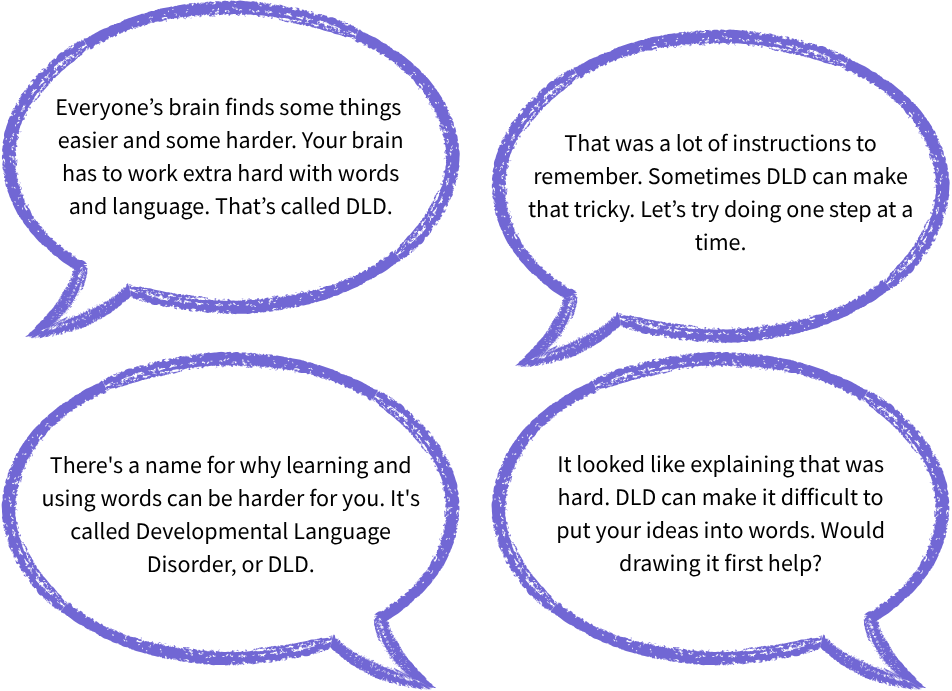
As your child gets older, you can help them find words to tell other people what they need:
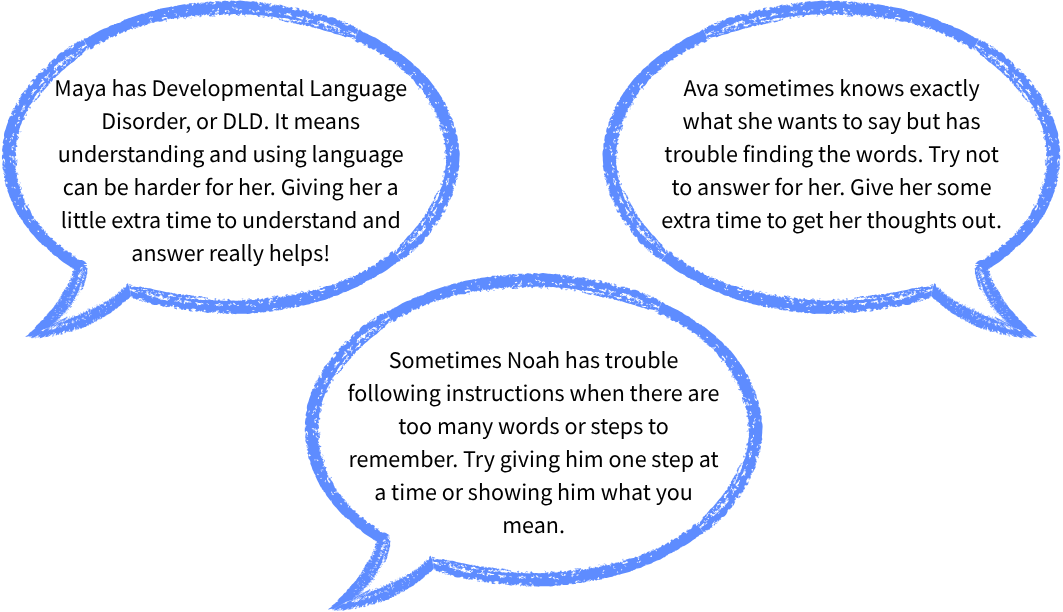
How to Talk About DLD With Others
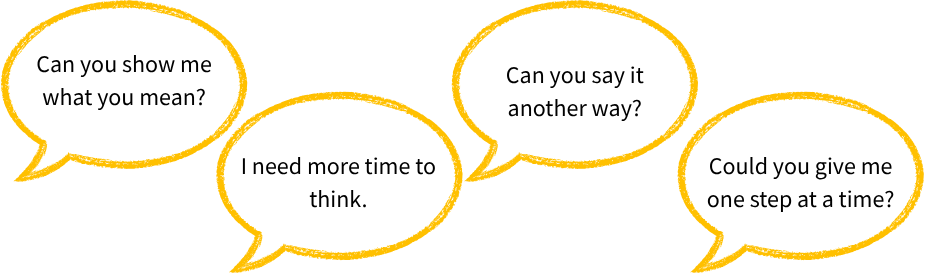
Family members, teachers, coaches, or friends may not have heard of DLD before. You don't have to teach them everything about DLD! Focus on what DLD means for your child and a few simple things they can do to make communication more successful. Here are some examples:
Your Speech-Language Pathologist can help!
They can help you and your child understand their DLD, identify strategies that work for them, and find ways to talk about DLD with family, friends, and teachers. A DLD diagnosis can seem daunting at first. But understanding how your child learns and communicating that to people around them can make a big difference. You don't have to figure everything out on your own. Speech-language pathologists are professionals who are trained to help grow your child’s language and overall communication development. These professionals can help you and your child take the next steps with confidence.
References and Helpful Resources:Bazzocchi, N. B. M., Kokotek, L. E., Crowe, K., & Washington, K. N. (2025). Beyond Test Scores: Using Drawings and Language Samples to Characterize Multilingual Children’s Language Profiles. Seminars in Speech and Language, 46(2), 87–106. https://doi.org/10.1055/s-0044-1801814
The DLD Project. (2021, August 23). Talking about DLD with your child [Audio podcast episode]. In The Talking DLD Podcast.
Kazmierczak-Murray, S., Kenny, N., Carolan, S., & Doyle, A. (2025). “It’s wishy-washy [...] You are getting this diagnosis because we’ve ruled out everything else.” Developmental language disorder (DLD) diagnosis in the Republic of Ireland: A qualitative exploration of the perspectives of parents and clinicians. PLOS ONE, 20(7), e0327373.
McGregor K. K. (2020). How we fail children with developmental language disorder. Language, Speech, and Hearing Services in Schools, 51(4), 981–992. https://doi.org/10.1044/2020_LSHSS-20-00003
National Institute on Deafness and Other Communication Disorders. (2022). Developmental Language Disorder. National Institutes of Health.